The Romantic Road
Explore the Romantic Road's imperial cities, walled towns, Ries crater, Renaissance Augsburg, Neuschwanstein and the Wieskirche.
Decide the bases, the north-to-south pace, the car-free limits, and how to sequence the walled towns, castles, and churches before turning the Romantische Strasse into a rushed dash from Wuerzburg to Fuessen.
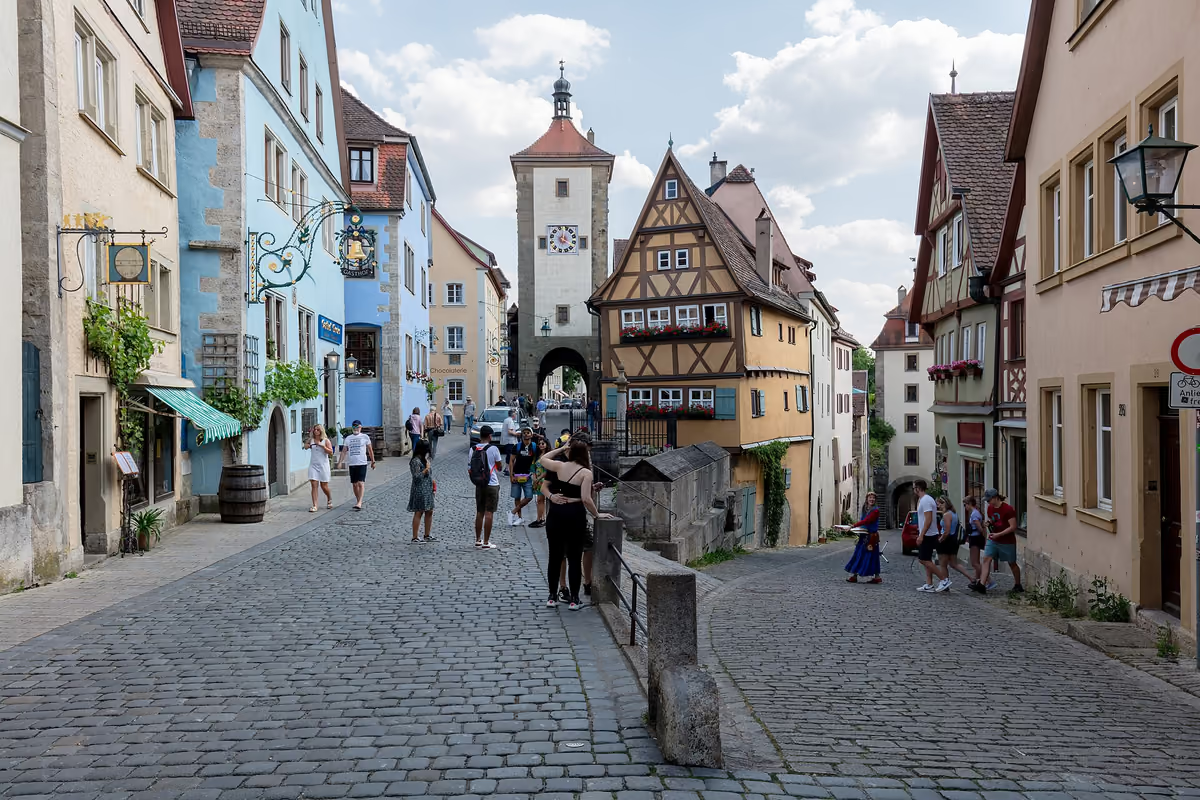
The official Romantic Road runs roughly 460 km through 29 towns in Bavaria and Baden-Wuerttemberg, linking Free Imperial cities, a town inside a meteorite crater, a Renaissance merchant capital, and an Alpine finale of castles and a rococo pilgrimage church. This planner is about sequence and pacing, not a single stop.


Start with the choices that change the booking: bases along the line, north-to-south pacing, car-free realism, which towns to linger in, and how to sequence the southern castles and churches.
Explore the Romantic Road's imperial cities, walled towns, Ries crater, Renaissance Augsburg, Neuschwanstein and the Wieskirche.
Choose your Romantic Road bases by rail access, driving plan, crowd timing, and how far south you want to be: Wuerzburg, Rothenburg, Dinkelsbuehl, Augsburg, or Fuessen.
How to pace the full Romantische Strasse from Wuerzburg to Fuessen: how many days, which towns to prioritise, and why the north-to-south direction ends on the Alpine high note.
Plan a car-free Romantic Road trip around rail bases, branch-line connections, and the seasonal coach, and understand which towns are easy and which are genuinely hard without a vehicle.
Compare the walled towns of the Romantic Road by character and crowd level so you can decide where to sleep, where to linger, and where a short stop is enough.
Plan the southern climax of the Romantic Road — Neuschwanstein, Hohenschwangau, the Wieskirche, and the Wuerzburg Residenz — around timed tickets and quiet hours instead of guesswork.
How to visit Rothenburg ob der Tauber properly: walk the near-complete town wall, read the Marktplatz and Rathaus, find the Ploenlein corner, see St. Jakob's Riemenschneider altar, and decide whether to overnight past the midday coach crowds.
Sequence the Alpine end of the Romantic Road: use Fuessen as a base, book timed tickets for Hohenschwangau and Neuschwanstein through the official ticket centre, and fit in the Wieskirche without rushing the finish.
How to use the Romantic Road's two cities: Wuerzburg's prince-bishops and the UNESCO Residenz with its Tiepolo staircase fresco at the north, and Augsburg's Fugger wealth and the Fuggerei, the world's oldest social housing, near the south.
Decide how long to give the Romantic Road: a 2-day taste of Rothenburg and the south, a classic 3-4 day north-to-south run, or a slower 5+ day version, and how car versus coach or rail changes the maths.
The guide is useful only if it helps travelers choose between real tradeoffs: which towns to sleep in, one wall walk or three, car or rail, and how to time Neuschwanstein and the Wieskirche.
Current openings, transport, route details, and timed-entry claims stay tied to official sources before they are treated as practical planning facts.